
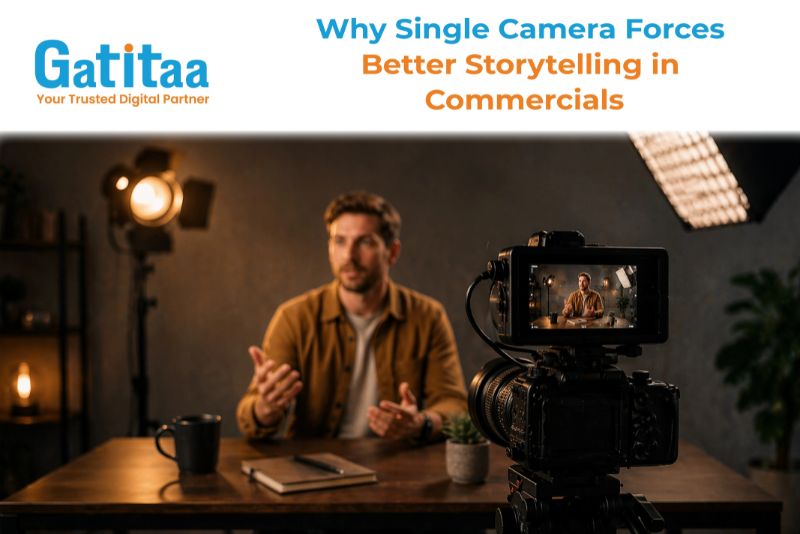
The commercial filmmaking industry considers large production setups to deliver higher professional standards. High-budget films require multiple cameras together with extensive production teams and sophisticated equipment setups. However, many directors believe that single camera storytelling commercials create stronger narratives. The simple setup requires filmmakers to plan their shots together with all their performance activities.
Forces Discipline & Intentionality
When working with one camera, every shot matters. Filmmakers cannot rely on multiple angles captured at the same time. The limitation creates a need for filmmakers to develop storytelling techniques through their planning process.
Directors must decide exactly what the audience should see and when. The filmmakers create the film according to their plan which results in their vision being executed effectively.
Encourages Cinematic & Purposeful Camera Movement
A single-camera setup by its very nature promotes some very thoughtful camera movement/action shots due to shot design being intricately connected to storytelling opposed to just exploiting several angles carelessly.
This approach supports cinematic storytelling in low budget commercials, where creative framing and movement can create a premium visual feel without expensive equipment.
Many independent creators and even a solo filmmaker can achieve strong cinematic results simply by planning each shot with purpose.
Better Lighting & Composition Control
The director of photography needs only one camera to create complete control over the lighting. The filmmakers need to focus on specific angles which lets them design the light and composition for every scene.
This is among the greatest benefits of single-camera shooting in ads. The benefit is one where the directors get to focus on the visual, not multiple camera setups.
Stronger Focus on Performance & Moment
The actors must perform their scenes multiple times because the director wants to capture the action from various camera positions. So, when actors perform for a single camera setup their performances become more concentrated.
The process using one camera setup improves narrative in advertising because it requires specific emotional scenes to be filmed instead of using unscripted video.
Enhances Editing & Pacing Choices
Editors often prefer single-camera footage because each shot is intentional. The editors can develop the story through their work with specific scenes instead of viewing all the available material.
The approach enables minimalist commercial production storytelling to create narratives which use fewer shots to establish a strong and understandable story.
Conclusion & Takeaway
While multi-camera productions have their place, single camera storytelling commercials often lead to more thoughtful filmmaking. The limitations encourage creativity, discipline, and stronger narrative focus.
For creators producing cinematic storytelling in low budget commercials, a single-camera setup can deliver powerful results without a large production budget.
FAQs
It serves as a highly useful concept because it supports deliberate framing and cinematic composition, aiming towards creating storytelling.
Because without careful preparation by the filmmakers, the power of the storytelling image becomes weak.
Lower production costs aside, a better lighting control and a greater focus on storytelling go a long way towards this goal.
Yes, single-camera setups are often perfect for short-form ads because they allow quick production with strong visuals.
It allows directors to focus on composition, lighting, and purposeful camera movement, which creates a cinematic look.
Recent Blog
- Zero-Click Search Is Stealing Your Traffic: Here Is How to Win It Back
- 5 AI Tools That Will Double Your Marketing ROI
- How to Prepare Your Marketing Strategy Before Google Completely Changes Search
- Why AI Search Engines Are Mentioning Your Competitors, Not You!
- Why Your Paid Ad Campaigns Will Cost Double This Year (Unless You Pivot Now)
- Why Are High Google Rankings Suddenly Driving Zero Clicks?
- What is AEO (Answer Engine Optimization) and How is it Different from SEO?
- How to Develop Authentic Brand Messaging in the Age of Generative AI
- Why Single-Camera Forces Better Storytelling in Commercials
- Why Human Content Still Outranks AI in 2026
- 2026 Web Design Trends: Organic Layouts, Motion Narratives & the Anti-AI Backlash Explained
- How AI Video Is Killing Traditional Editing in 2026 — And What Comes Next
- What Happens When AIs Start Talking to Each Other?
- How Do I Get My Brand Mentioned in Gemini and ChatGPT’s Daily Summaries?
- Multilingual SEO: Rank in Any Language with Voice Search
- Convert Your WhatsApp Enquiries: The 2026 Sales Funnel That Actually Sells
- Why Swiggy and Zomato Are Moving Toward “Quiet Marketing”
- Visual SEO: Why Your Product’s Physical Packaging is Your New Homepage
- Are Third-Party Cookies Officially Dead in 2026?
- Who Are You Building For? Designing Websites for Humans vs. AI Crawlers
- Employee-Generated Content (EGC): Why Your Staff is Your Best Ad Agency
- YouTube Shorts vs. Instagram Shop: Where Should You Launch in India in 2026?
- The 2026 Marketing Budget Breakdown: Where to Spend vs. Where to Save
- RIP SEO? Why 2026 Is the Year of GEO
- The Rise of ‘Vibe’ Marketing: Why Gen Z Is Ignoring Your Polished Ads
- Why does small business need a strong brand identity in the digital age?
- SEO-Friendly Website Design That Ranks and Converts
3 Responses