
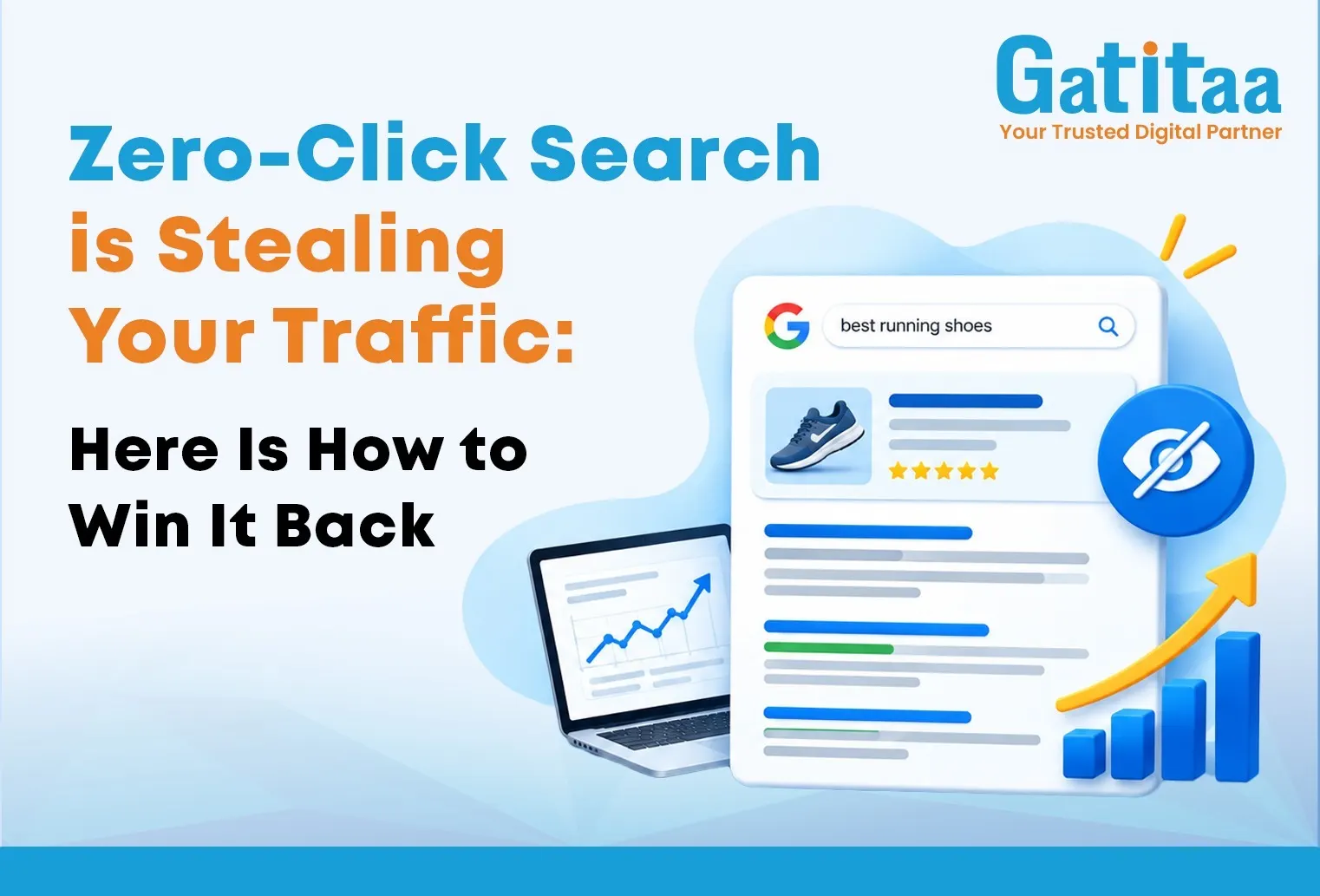
Search behavior has completely evolved due to the arrival of AI-based search results. People now have the ability to get their queries answered directly from the Google search page, and not through a website. Many businesses have experienced a decrease in organic visits, despite ranking high on search engines. It is necessary for brands to develop a Zero Click Search Strategy in order to make sure that they achieve visibility, authority, and credibility of users.
Understanding the Zero-Click Reality
A zero-click search happens when users receive the information they need directly from search results without clicking a website link. With the introduction of featured snippets, knowledge panels, local search results, and artificial intelligence generated summaries, such behavior has grown increasingly common. Instead of considering this as a menace, organizations should take this as an opportunity to develop brand awareness. This will ensure that your organization is established as a trustworthy source prior to visiting your website.
Shift Metrics from "Traffic" to "Brand Impression Share"
Organic traffic is still important but shouldn’t be the sole KPI. Marketers need to begin tracking how frequently a brand is appearing in both the traditional search results and in unanswered snippets or AI generated responses. This type of exposure leads to brand familiarity and familiarity is almost always a leading indicator of a consumer’s next purchase. Organic Search Queries, Brand impressions/engagement, and branded searches can better inform marketers as to where they are headed than website visits.
The "Information Gap" Content Strategy
One effective way to How to win zero click search is by creating content that answers basic questions while encouraging users to explore further. Share useful summaries in search-friendly formats but reserve deeper insights, original research, case studies, or practical tools for your website. This creates an information gap, which is why engaged users are motivated to click through to get more information. Any business that adds consistent level of value is going to have a better shot at getting qualified traffic rather than casual curiosity seekers.
Optimizing High-Intent Conversion Pages
Not every page needs to attract large volumes of traffic. Product pages, service pages, pricing pages, and contact pages should focus on converting visitors who already have purchase intent. A robust Google AI Overview optimization strategy involves keeping these pages straightforward, current and easy to navigate. Incorporate trust signals, customer testimonials, good calls to action and in-depth content that will enable users to make confident choices. These enhancements will help to improve the profitability of visitors arriving from searches aided by AI technology.
Conclusion
Zero-click search is changing how businesses measure online success. Apart from depending on website visits alone, it is important for companies to emphasize Brand visibility without clicks while improving quality of content and user experience. Companies which change with this trend will be able to gain more authority, maintain customer trust, and limit the effects of decrease in SEO click through rate. A well-balanced approach concentrating on visibility, engagement and conversion will yield sustainable results.
FAQs
A zero-click search is one in which answers are shown on the search results page itself. Users are not directed to any other web page.
Establish trust with search visibility when maximising on high intent pages and owned marketing channels to generate leads.
Recent Blog
- Zero-Click Search Is Stealing Your Traffic: Here Is How to Win It Back
- 5 AI Tools That Will Double Your Marketing ROI
- How to Prepare Your Marketing Strategy Before Google Completely Changes Search
- Why AI Search Engines Are Mentioning Your Competitors, Not You!
- Why Your Paid Ad Campaigns Will Cost Double This Year (Unless You Pivot Now)
- Why Are High Google Rankings Suddenly Driving Zero Clicks?
- What is AEO (Answer Engine Optimization) and How is it Different from SEO?
- How to Develop Authentic Brand Messaging in the Age of Generative AI
- Why Single-Camera Forces Better Storytelling in Commercials
- Why Human Content Still Outranks AI in 2026
- 2026 Web Design Trends: Organic Layouts, Motion Narratives & the Anti-AI Backlash Explained
- How AI Video Is Killing Traditional Editing in 2026 — And What Comes Next
- What Happens When AIs Start Talking to Each Other?
- How Do I Get My Brand Mentioned in Gemini and ChatGPT’s Daily Summaries?
- Multilingual SEO: Rank in Any Language with Voice Search
- Convert Your WhatsApp Enquiries: The 2026 Sales Funnel That Actually Sells
- Why Swiggy and Zomato Are Moving Toward “Quiet Marketing”
- Visual SEO: Why Your Product’s Physical Packaging is Your New Homepage
- Are Third-Party Cookies Officially Dead in 2026?
- Who Are You Building For? Designing Websites for Humans vs. AI Crawlers
- Employee-Generated Content (EGC): Why Your Staff is Your Best Ad Agency
- YouTube Shorts vs. Instagram Shop: Where Should You Launch in India in 2026?
- The 2026 Marketing Budget Breakdown: Where to Spend vs. Where to Save
- RIP SEO? Why 2026 Is the Year of GEO
- The Rise of ‘Vibe’ Marketing: Why Gen Z Is Ignoring Your Polished Ads
- Why does small business need a strong brand identity in the digital age?
- SEO-Friendly Website Design That Ranks and Converts
13 Responses