
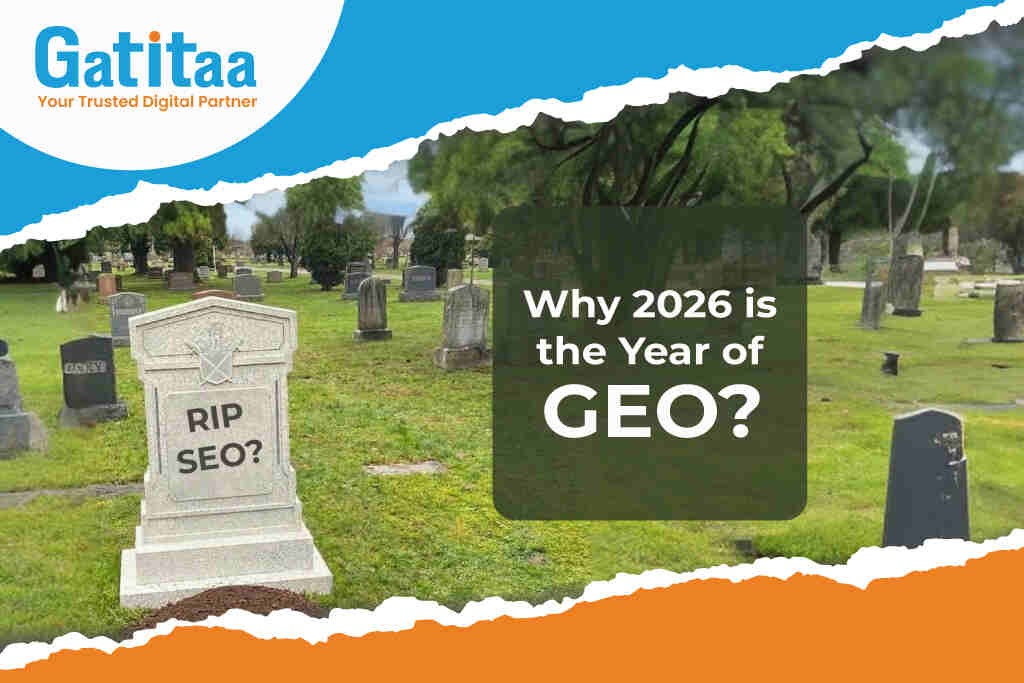
For more than twenty years, SEO has been the main factor in determining how companies create content and get found. However, it seems AI-powered search technologies such as ChatGPT Search, Perplexity, and Google’s AI Overviews have ushered in a new era—GEO. In 2026, it will be a matter of not only being ranked for humans but rather being comprehended, trusted, and quoted by AI systems that will lead to success.
The Generative Shift (SEO vs GEO vs AEO)
Traditional SEO-focused sites with keywords in mind. Were you aware of AEO (Answer Engine Optimisation before? It is making it a necessity for household names to provide to-the-point responses to questions with rich snippets. Well, now, GEO creates materials that AI will pick up, synthesise, and cite. The search is changing from click results to getting the answer directly, which means brands have to make sure their content is not only visible but also AI-trusted upon. SEO is evolving, not being replaced by GEO. So, you need a blend of human navigation using SEO and intelligence guidance using GEO.
The Priority of E-E-A-T and Entity Authority
During the GEO period, E-E-A-T (Experience, Expertise, Authoritativeness, and Trustworthiness) was not merely an SEO recommendation; it was the cornerstone of generative visibility. AI systems give preference to powerful entities, confirmed sources, uniform brand identities, and writers of high trust. This creates a greater need for ORM and Brand Strategy Development. When AIs decide what to cite or synthesise, they look for:
- Strong author profiles
- Verified expertise
- High-quality citations
- Consistent digital identity across platforms
- Brand authority built over time
In other words: to win in GEO, your brand must be an entity, not just a website.
Technical GEO Requirements
GEO introduces new technical expectations that go beyond traditional SEO checklists. Brands must implement:
- Structured data optimised for AI parsing
- Entity markup (schema, Wikidata, knowledge graph alignment)
- Fast, clean, accessible UI/UX
- Unified brand signals across all digital assets
- Multiformat content (text, video, structured insights, citations)
- Machine-readable clarity in headings, summaries, and data points
The contemporary Website Development Company will not only have to create websites for Google bots but also for such advanced AI crawlers that have the ability to interpret text, code, images, and context.
Content Strategy for AI Consumption
Generative search is a technique that comprehends the context rather than merely relying on the words. It means that the same content needs to be prepared for AI and human consumers. The most successful GEO content is characterised by being easy to understand, having a high level of authority, being structured in a proper way, being factual, and having a good amount of references. Besides using consistent terms and having clear entity signals, AI encourages the production of content that is precise, informative, and rich in context—thus influencing the future direction of Content Marketing and Creation.
FAQs
1. Does Generative Engine Optimisation (GEO) completely replace traditional SEO?
No. GEO and SEO play mutually important roles. It enhances traditional SEO for human search and expands visibility for AI-generated answers.
2. What is the single most important technical change for GEO?
Entity optimisation is the mechanism of ensuring that your brand, authors, and content are clearly defined and machine-recognisable across the web.
3. How does a content writer “optimize” for an AI answer?
Come up with precise, structured, reliable explanations with a clear focus on the material. Please offer consistent terms and insights with backing material.
4. How do I measure my GEO success?
Monitor AI references, their incorporation into generative responses, brand visibility through AI responses, entity detection, and user interaction from AI-powered search engines.