
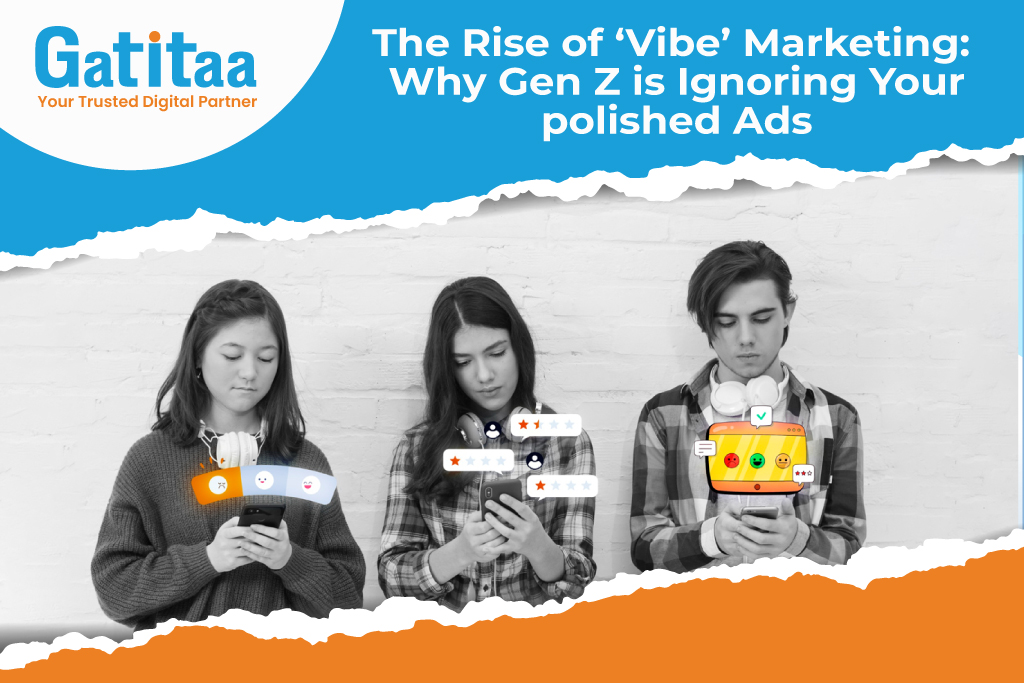
Generation Z doesn’t completely negate the existence of ads—they are just against the common kind of advertising, which is polished, traditional, and feels disconnected from TikTok culture and the authenticity of lo-fi. This change gives rise to Vibe Marketing, a technique based on feelings, relatability, and being in tune with culture. For companies that are focusing on Gen Z Marketing Strategy and Social Media Marketing, accepting this method has become a necessity.
The Authenticity Imperative
The new currency for Gen Z is Authenticity, which they swiftly turn down to anything that is overly polished or has a corporate touch. Vibe Marketing relies on genuine, unrefined moments—transparency, informal tones, and sincere storytelling. Brands that act like persons, not businesses, earn trust, hence their complete harmony with Emotional Marketing and contemporary Content Marketing strategies.
The Power of UGC and Co-Creation
User-generated content is effective since it appears to be real and not like the usual marketing. Gen Z prefers the so-called ordinary creators to be more trustworthy than the high-quality brand content. One of the co-creation methods, through duets, stitches, remixes, and collaborations, these creations make the audience feel them more and thus become attached and loyal. This common right of use is a factor that changes the marketing process into a community-run machine instead of a single brand message going out.
The Rise of the Micro-Influencer or Creator
Micro-creators have turned into the main support of the present Influencer Marketing. The modern consumers’ characteristics, narrowed down audiences, and true narrating abilities also make them the ideal partners for Vibe Marketing. Their content merges with the social feeds, is a little real and feels like it starts actual dialogues. They are not mere influencers—they are the cultural interpreters who enable brands to communicate properly with Gen Z. The dissimilarity in levels of engagement and trust that exists between them makes brands collaborating with them very powerful in carving out their Brand Voice.
Speed Over Perfection
Trend cycles have now become extremely fast. Brands that take their time in creating campaigns often do so at the expense of cultural relevance. Nowadays, the quickness of AI has surpassed the traditional refinements of publishing. From rapid content generation to trend spotting and instant creative variations, AI makes it possible for brands to keep up with Gen Z. The new approach? Publish quickly, iterate fast, and adapt in real time.
From Reach/Impressions to Engagement Velocity
The classic metrics, such as reach and impressions, are no longer the main indicators of success. Generation Z prefers content that creates emotion and conversation. The speed at which people interact with content—through remixing, commenting, or sharing—matters most, making Engagement Velocity the true measure of impact. A low-budget viral TikTok outperforms a high-budget commercial. In Vibe Marketing, cultural energy outweighs visual perfection.
FAQs
1. What is the core difference between “Vibe Marketing” and traditional branding?
Traditional marketing relies heavily on the aspects of consistency and upliftment, while Vibe Marketing depends on the facets of truthfulness, feelings, and alignment with the mainstream culture.
2. How can a large, corporate brand create an “authentic” vibe?
Display actual staff, accept low-quality content, put community spokespersons to the forefront, partner with minimalistic creators, and be open and honest in communication.
3. Which social platforms are best for Vibe Marketing?
TikTok, Instagram Reels, YouTube Shorts, and such platforms tire more for content for creators, meant for casual and fast content.
4. Can I use the same ad creative for polished TV and Vibe Marketing?
No. TV ads rely on perfection; Vibe Marketing relies on relatability and cultural alignment—requiring different formats and styles.